
What Knox Tax Records Show
Three offices split the work in Knox County property tax records. The Engage portal carries parcel identity and valuation detail. Deductions, credits, deed transfers, tax sales, and redemptions belong to the Auditor. The Treasurer holds the tax-year ledger.
| Field | What It Shows | Where |
|---|---|---|
| Property ID | Exact parcel key | Assessor |
| Valuation | Figure read with year and label | Assessor |
| Deductions | Qualifying reductions or credits | Auditor |
| Tax charges | Spring and fall amounts | Treasurer |
| Payments and balance | Ledger activity and sum remaining | Treasurer |
Indiana assesses at market value-in-use with a 100 percent assessment level. A deed sale price and an assessed value are different things. So are a bill and an appraisal. Before comparing figures, note the assessment year and the component label on each screen. The Valuation display can appear without spelling out the precise component or year. Confirm both before relying on the number.
Use Knox Treasurer Search Fields
The Treasurer property list takes Dist#, Parcel #, Name, Tax Year, and Property Address. Grab the exact parcel number from Engage first, then search by it here. When a parcel was split or combined in the last two years, the portal suggests searching the owner's last name instead.
| Field | Entry | Use |
|---|---|---|
| Parcel # | Full punctuated key | Exact tax account |
| Name | Owner last name | Related bills |
| Tax Year | Displayed year | Correct period |
| Property Address | Street and optional city | Account discovery |
| Dist# | District if known | Narrow results |
The charges screen adds Tax Id, Map #, Deeded Owner, minimum and maximum amounts, spring, fall, payments, and balance. The system marks results "Not for Official Use." Confirm any payoff, delinquency, or sale status directly with the office.
Look Up a Knox Tax Bill
A good tax lookup runs from parcel identity to the chosen tax year. An address can start the search, but the full StateNumber prevents many same-street and city-name mismatches. After any recent transfer, compare the tax owner text against the assessment roll.
- Search the address in Engage and copy the exact property number.
- Run the parcel in the Treasurer list and choose the intended tax year.
- Separate spring, fall, payments, and balance in the charges view.
- Check Auditor deductions and confirm any delinquency or sale with the custodian.
- Assessed value
- Value placed on taxable property under Indiana rules.
- Levy
- The amount a taxing unit seeks through property tax.
- Homestead deduction
- A qualifying reduction in taxable treatment.
- Tax lien
- A legal claim arising from unpaid tax.
County information lists spring and fall installments due May 10 and November 10, with weekend and holiday adjustments. Always verify the live bill. The Treasurer's Deeded Owner line is tax-system text, not a certified deed.
Read Knox Assessment Values
The Assessor locates, identifies, and appraises taxable property. Annual trending draws on sales from the prior 12 months to estimate market value-in-use nearby. Separately, Indiana runs a four-year cyclical reassessment with field review. Trending and the cyclical review are distinct exercises. Engage detail can include Summary, Transfer History, Sales List, Valuation List, Taxes, Land Info, Improvement Info, Sketch, and Forms. Read each year and its label. A transaction price does not automatically become the next assessment. The DLGF overview covers statewide assessment concepts, and the Knox card adds local facts.
Review Knox Tax Deductions
The Knox Auditor posts homestead, mortgage, over-65, and blind or disabled deductions. Each carries its own eligibility and filing rules. A deduction changes tax treatment only; it proves neither title nor where an owner lives. Ask which tax year reflects an approved filing and what the current form demands. Weigh gross assessment, deductions, and credits together before explaining the final bill. Never infer a denial from one portal screen. Note: Deed transfer, assessment, deduction, and Treasurer systems update on different schedules. Date every result you use.
Check Knox Delinquency Status
The Auditor manages tax sales and redemptions, and the Treasurer supplies charges and payments. The county homepage lists an October 28, 2026 tax sale. Recheck that date and each parcel's status on official pages before relying on it. A notice, a delinquent balance, a court filing, and a final deed mark different stages. Confirm payment, redemption, and any later instrument. The delinquent list spans tens of thousands of entries. That reflects portal scope, not the number of delinquent parcels. Use official county contact details before sending money. A mailed or electronic demand alone cannot establish a valid balance or a completed sale.
Knox Property Tax Records by Payment Season
Indiana usually splits each year's obligation between spring and fall. Knox County sets May 10 and November 10 due dates. These stay subject to the live bill and weekend or holiday rules. Datapitstop shows spring, fall, payments, and balance as separate fields. So a zero in one column does not mean a zero annual obligation. Pick the tax year you intend. Record each seasonal amount, and note when you checked the portal. Mail payments go to the Knox County Treasurer at 111 N 7th Street, Suite 1, Vincennes. A gray drop box sits at the courthouse entrance on the 8th Street side.
Knox Property Tax Records After a Parcel Split
A split or combination can leave the old parcel number in one tax year. Successor numbers then appear in the next. The Treasurer recommends a last-name search when the change happened within the past two years. Collect every bill that comes back. Then compare the legal description, transfer data, the Auditor record, and the recorded plat. Never carry a balance from parent parcel to new parcel without official confirmation. Keep the year beside each number. That way the tax history shows which parcel existed at that moment.
Official Knox Property Tax Records and Copies
The Treasurer's screens warn "Not for Official Use." Treat them as discovery tools only. When a payoff, redemption, or formal dispute turns on the answer, ask the Treasurer or Auditor which official record exists. Give the parcel number, owner wording, address, and tax year. Say whether you need charges, payment history, a balance, redemption status, or a sale document. An APRA request can reach unposted material. Fees vary by request, so ask about the current charge before ordering.
Knox Property Tax Records Versus Deed Proof
The tax system's Deeded Owner label is not title. It helps you match an account and nothing more. For a transfer, the Recorder's latest instrument is the controlling paper source. A homestead or mortgage deduction is tax treatment. It is not conclusive proof of occupancy. When Engage, the Treasurer, and the deed disagree, date each result and carry the full parcel number to the proper offices. Different workflows refresh at different times, so judge each record by its purpose rather than forcing every system to answer the same question.
Appeal a Knox Assessment
An appeal begins with the notice and the property facts. The final tax bill is only the ending point. Review Form 11, the parcel characteristics, sketch, land and improvement data, recent sales, and the assessment year. Contact the Knox Assessor and name the issue.
DLGF guidance routes appeals through Form 130. It goes to the local assessor or the Property Tax Assessment Board of Appeals. The general deadline is June 15, or 45 days after notice where that applies. Verify the date printed on your current notice. A further appeal uses Form 131 with the Indiana Board of Tax Review.
The state appeal page is the official source.
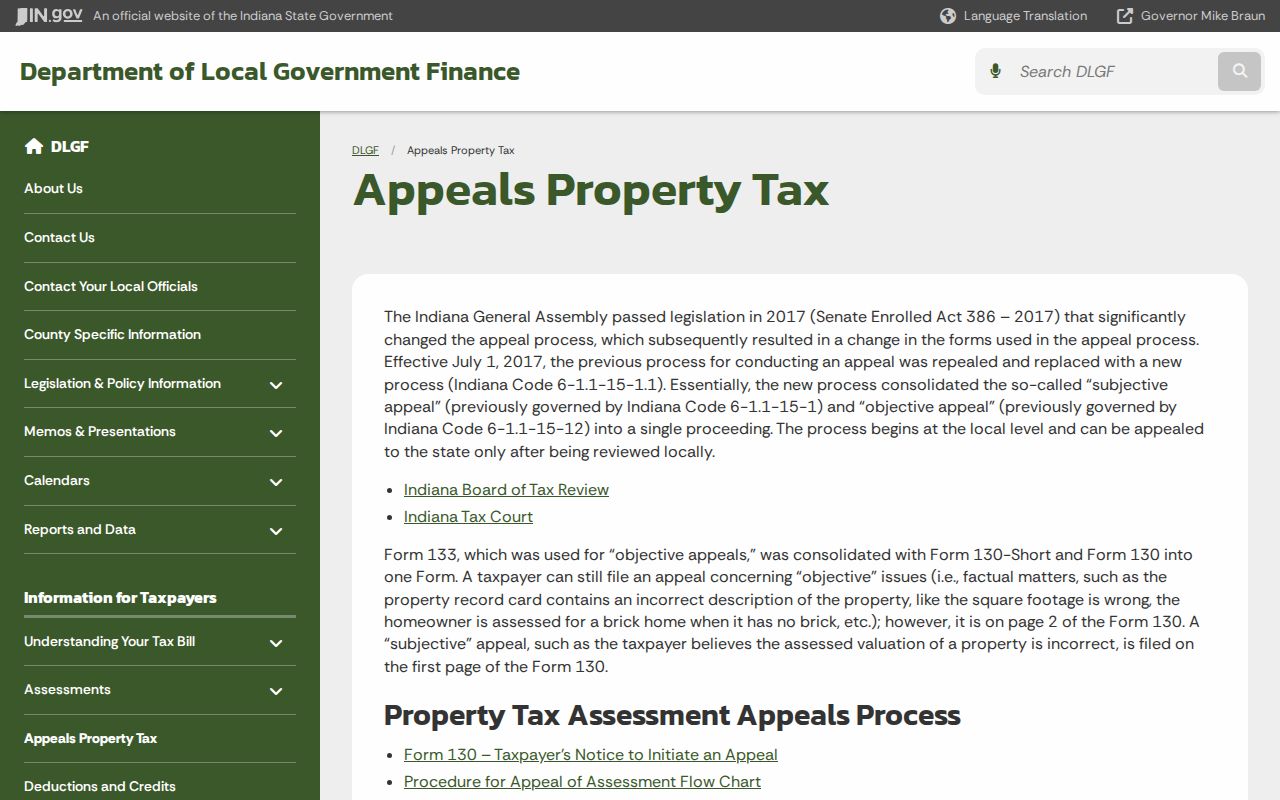
The state page helps you find current forms. For a Knox parcel, the dated Form 11 still controls the filing calculation. Useful evidence includes corrected facts, dated photos, relevant sales, and an appraisal. IBTR is not the venue for every dispute. It does not hear disagreements over how a correct assessment becomes the tax bill.
Appeal window. Verify the Form 11 date and the applicable June 15 or 45-day deadline. File Form 130 with the local assessment authority on time.